
CALL US TOLL FREE
888-346-3220

Living with arthritis or persistent joint stiffness can make even simple activities—getting out of a chair, bending down, climbing stairs, or sitting for long periods—less comfortable than they used to be.
That is one reason many shoppers look at massage chairs as an at-home comfort and relaxation option.
The best massage chair for someone with arthritis is not necessarily the chair with the most aggressive rollers or the strongest massage. In many cases, the better choice is a chair that emphasizes gentle massage programs, adjustable intensity, soothing heat, good body support, easy entry and exit, and accurate body scanning.
In this guide, we’ll explain what to look for when shopping for a massage chair for arthritis or joint discomfort, which features matter most, what features may be unnecessary, and how to choose a chair that fits your body and comfort preferences.
Important: Massage chairs are wellness and relaxation products, not medical treatments for arthritis. If you have severe arthritis, osteoporosis, recent surgery, circulatory problems, joint replacements, or another medical condition, talk with your healthcare provider before using a massage chair.
For most people with arthritis or sensitive joints, look for a massage chair with:
Adjustable roller intensity
Gentle or relaxation-focused automatic programs
Lower-back or lumbar heat
Calf and foot air compression
Adjustable foot and calf massage
Zero-gravity reclining
Accurate body scanning
Adjustable shoulder position
Wide seating and comfortable padding
Easy-to-reach controls
A powered recline that makes entry and exit easier
The goal should usually be comfort and customization, not maximum massage strength.
Two massage chairs can feel completely different.
One may deliver a deep, aggressive massage designed for athletes and people who enjoy intense pressure. Another may provide slower roller movements, gentle air compression, heat, stretching, and a more relaxing experience.
For someone dealing with arthritis or sensitive joints, that distinction matters.
The wrong chair can feel too intense.
The right chair gives you enough control to make the massage feel comfortable.
That is why shoppers with arthritis should pay close attention to features such as intensity adjustment, body scanning, heat, recline position, airbag pressure, roller width, and the ability to turn certain massage zones on or off.
This may be the single most important feature to look for.
Arthritis can make certain areas of the body more sensitive to pressure. A massage that feels relaxing to one person may feel uncomfortable to another.
A good chair should allow you to reduce:
Roller strength
Airbag pressure
Foot massage intensity
Calf compression
Massage speed
Ideally, you should also be able to choose gentler automatic programs rather than being forced into a strong full-body massage.
Relax
Gentle
Recovery
Comfort
Morning
Evening
Stretch
Sleep
Wellness
Program names vary by manufacturer, so intensity adjustment is more important than the name itself.
Heat is one of the most popular massage-chair features among shoppers experiencing stiffness.
Many massage chairs provide heat in the:
Lower back
Lumbar area
Seat
Calves
Feet
Knees
The exact location depends on the model.
Heat does not treat arthritis itself, but many people find warmth relaxing and comfortable, particularly when stiffness is worse in the morning or after long periods of inactivity.
For most users, gentle lumbar heat combined with a low-intensity massage is a great place to start.
Some premium chairs offer more extensive heat zones, including calves or feet. These can be especially attractive for people whose discomfort is concentrated in the lower body.
Zero-gravity positioning reclines your body while elevating your legs.
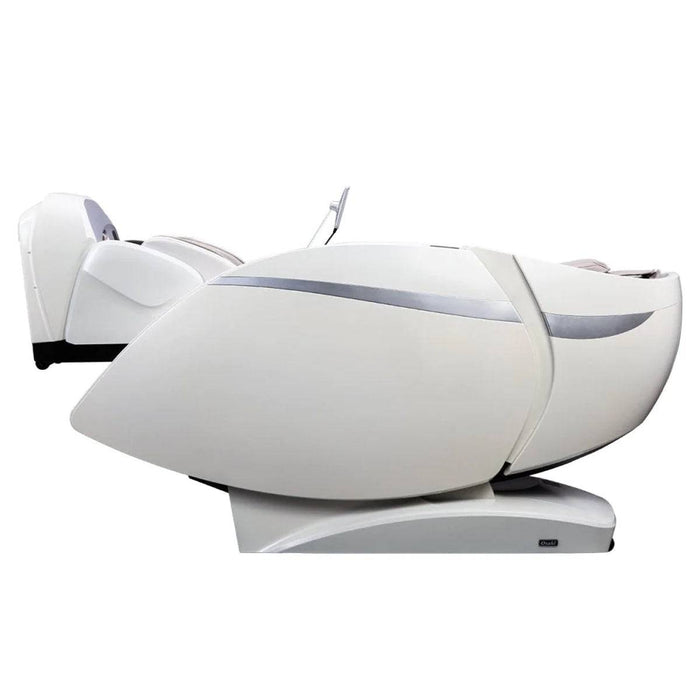
The position is designed to distribute your body weight more evenly across the chair.
For many users, this creates a more supported feeling through the:
Lower back
Hips
Knees
Legs
Zero gravity can also make the massage feel less intense because your body is supported by the chair rather than sitting upright against the rollers.
Many massage chairs offer one, two, or even three zero-gravity positions.
For someone with arthritis or joint sensitivity, having multiple recline positions gives you more flexibility to find the position that feels best.
Modern massage chairs typically scan your body before the massage begins.

The chair estimates the position of your:
Shoulders
Spine
Neck
Back
This allows the massage mechanism to adjust to your height and body shape.
Body scanning becomes especially important for people with sensitive joints because poorly positioned rollers can feel uncomfortable.
Premium chairs may allow you to manually fine-tune the shoulder position after the scan.
That small adjustment can make a surprisingly big difference.
Massage-chair airbags inflate and deflate around various parts of the body.
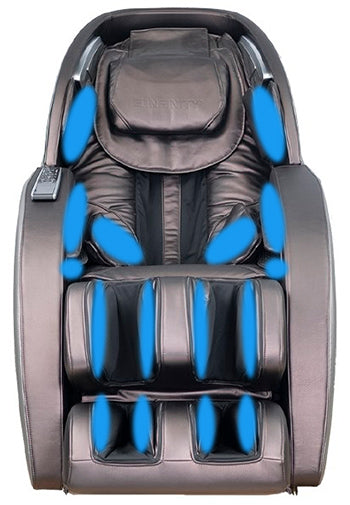
Common air-compression areas include:
Shoulders
Arms
Hands
Hips
Thighs
Calves
Feet
Air compression generally feels different from roller massage.
Rather than pressing into the muscles with a mechanical roller, airbags provide more of a squeezing or hugging sensation.
For people who find strong rollers uncomfortable, gentle air compression can be one of the most useful features in the chair.
Look for a model that allows you to adjust airbag intensity independently.
Lower-body comfort becomes increasingly important for many older adults.

Premium massage chairs may include:
Calf airbags
Calf kneading
Foot rollers
Heel airbags
Toe compression
Calf heat
Automatic leg-length adjustment
If you have sensitive feet, however, foot rollers can sometimes feel too strong.
That is why adjustable intensity matters.
A chair that allows you to reduce or disable the foot rollers is often preferable to a chair with only one aggressive setting.
This is one feature buyers often overlook.
Some massage chairs sit very low to the ground and recline deeply. That can make them harder to get into or out of, especially for someone dealing with:
Knee stiffness
Hip stiffness
Reduced mobility
Balance concerns
Before buying, consider:
A very low seat may make standing up more difficult.
A wider seat may provide more room to reposition yourself.
Some chairs have large side panels that can make entry feel more confined.
A powered ottoman can make it easier to position your legs.
Controls should be easy to reach without twisting or leaning.
If possible, trying the chair in person is extremely helpful.
Massage Chair Planet has showroom locations where shoppers can compare chair fit, massage intensity, seat height, controls, and entry comfort before making a decision.
There is no single correct answer.
An S-track massage chair generally follows the natural curvature of the spine and focuses primarily on the neck and back.
An SL-track massage chair continues farther underneath the seat and may provide massage coverage through the glutes and upper hamstrings.
Your main concern is your neck or back
You prefer a more traditional massage
You do not want rollers traveling beneath your seat
You want more hip and glute coverage
Lower-body stiffness is a concern
You like longer massage coverage
For arthritis shoppers, intensity control is usually more important than simply choosing S-track versus SL-track.
Not necessarily.
“4D” does not automatically mean painful or aggressive.
A good 4D massage chair usually gives you more control over roller speed, depth, rhythm, and intensity.
That can actually be beneficial.
The key is choosing a chair that allows the massage to be dialed down.
Someone who enjoys very gentle massage may still benefit from a premium 4D chair if the chair offers excellent customization.
However, there is no reason to pay extra for 4D simply because it sounds more advanced.
A well-designed 3D chair with excellent intensity control may be a better fit for some shoppers.
Prioritize:
Adjustable roller intensity
Lumbar heat
Zero gravity
Body scanning
Adjustable roller width
Prioritize:
SL-track coverage
Hip airbags
Seat compression
Zero-gravity recline
Prioritize:
Adjustable leg rest
Calf compression
Calf kneading
Lower-body heat
Easy entry and exit
Prioritize:
Adjustable foot rollers
Foot airbags
Removable or adjustable foot intensity
Extendable leg rest
Prioritize:
Accurate shoulder scanning
Manual shoulder-position adjustment
Adjustable roller width
Low-intensity neck programs
Massage-chair manufacturers love features.
Some are extremely useful.
Others look impressive on a specification sheet but may not matter for your needs.
If arthritis and comfort are your primary concerns, you may not need to pay extra for:
Extremely aggressive stretching
Maximum-strength deep-tissue programs
Large entertainment screens
Voice control
Bluetooth speakers
Decorative lighting
App connectivity
Those features are nice to have, but they matter far less than:
fit, comfort, intensity adjustment, heat, body scanning, and ease of use.
Massage chairs vary tremendously in price.
You may find:
Basic rollers
Limited airbags
Zero gravity
Simple heat
Fewer intensity adjustments
These chairs may work for occasional use, but customization can be limited.
This is one of the strongest value ranges.
You can often find:
3D massage
SL-track systems
Multiple automatic programs
Better airbags
Improved body scanning
Heat
Foot rollers
Zero gravity
Greater intensity control
Premium chairs may add:
Advanced 4D rollers
Better body scanning
More natural massage movements
More heat zones
Improved calf and foot massage
Higher-quality materials
More precise adjustments
Longer or more comprehensive warranties
For someone with arthritis, the most expensive chair is not automatically the best.
The better chair is the one you can comfortably use every day.
Many massage-chair shoppers are buying for themselves, a parent, or an older family member.
For seniors, we recommend paying special attention to:
Ease of entry
Seat height
Remote simplicity
Massage intensity
Body scanning
Heat settings
Leg-rest operation
Seat width
Recline controls
A chair with 50 features is not necessarily better if the user cannot easily operate it.
Sometimes the best senior-friendly massage chair is simply the chair with the clearest controls and gentlest settings.
No.
Massage chairs should be viewed as an at-home relaxation and comfort product, not a replacement for medical care.
Depending on your condition, your healthcare provider may recommend treatments such as:
Exercise
Physical therapy
Medication
Weight management
Heat or cold therapy
Mobility exercises
Joint injections
Surgery
A massage chair may complement a wellness routine for some people, but it should not replace treatment recommended by your doctor.
Ask your healthcare provider before using a massage chair if you have:
Severe osteoporosis
Recent surgery
Joint replacement
Blood-clotting disorders
Deep vein thrombosis
Pacemakers or implanted medical devices
Serious cardiovascular conditions
Significant neuropathy
Severe swelling
Acute injury
Pregnancy
Unexplained pain
When in doubt, ask.
For someone with arthritis, absolutely, if possible.
Massage preference is extremely personal.
Specifications cannot tell you:
How strong the rollers will feel
Whether the chair fits your shoulders correctly
Whether the foot rollers feel comfortable
Whether the seat is easy to enter
Whether you like the air compression
Whether the chair fits your height
Trying multiple chairs side by side can quickly reveal which type of massage you prefer.
Massage chairs are not a treatment for arthritis, but some users enjoy them for relaxation, warmth, muscle massage, and general comfort. People with arthritis should use gentle settings and discuss massage-chair use with their healthcare provider if they have significant medical concerns.
There is no universal setting, but many users prefer low roller intensity, gentle air compression, lumbar heat, and a comfortable reclined or zero-gravity position.
Many people enjoy heat when they feel stiff. Massage-chair heat is generally designed for comfort and relaxation rather than medical treatment.
Aggressive massage is not appropriate for everyone. If your joints are sensitive, start with the lowest intensity and increase it only if the massage remains comfortable.
Many seniors use massage chairs, but safety depends on the person's medical history, mobility, bone health, and other factors. A healthcare provider can help determine whether massage-chair use is appropriate.
Look for chairs with a comfortable seat height, wide entry area, powered footrest, simple controls, and a recline position that can return fully upright before you stand.
Either can work. The important feature is adjustability. A chair that allows you to reduce roller depth and pressure may be better than a more advanced chair that feels too strong.
If you are shopping for a massage chair because you deal with arthritis or joint stiffness, don't get distracted by whichever chair has the longest feature list.
Start with the basics.
Look for a massage chair that:
Fits your body correctly
Offers gentle massage settings
Lets you adjust pressure
Provides comfortable heat
Supports your legs and lower back
Is easy to enter and exit
Has controls you can easily understand
The best massage chair is the chair you actually enjoy using.
And when arthritis or joint sensitivity is involved, gentle, adjustable and comfortable usually beats stronger and more aggressive.
Massage Chair Planet carries massage chairs across multiple price ranges, massage styles, body sizes, and intensity levels.
If you're unsure which chair will work best for your height, body type, mobility needs, or preferred massage intensity, our team can help narrow down the options.
You can also visit one of our showrooms to experience different massage chairs in person before you buy.
Shop Massage Chairs at Massage Chair Planet or contact our team for personalized recommendations.


